Questions,
Answers, Discussions about Technical
issues related to R/C flying Submit
your input to the webmaster
(Please
put Tech Talk in the subject line)
Awhile back there was a discussion at the field
about Lithium Polymer battery voltages
balancing. I researched the subject via Google
and found a wide range of expert advice and
specs. Below is a spattering of the info
found….
Max
voltage/cell
4.23V
4.205V
4.12V
Minimum
voltage/cell
2.73V
2.47V
3.0V
Imbalance of one cell of greater than;
0.1V difference from lowest to highest
cell voltage
0.06V compared to average of other
cell(s) in the pack.
My Opinion - Max 4.1v Min 3.0v Bal 0.1v between
highest and lowest.
Best Battery Brand ? - I have no opinion, I have
tried MANY. Some same-brand, same-size
packs purchased from the same-place at the
same-time have behaved differently.
Worst Battery Brands - I could list a few, but
none of those are for sale anymore!
What works best for me - Not running the pack
down until the ESC cuts it off. Using
approximately 70% of the battery capacity before
recharging appears to have doubled the life
expectancy of the packs I have used.
If anyone else has experiences or opinions on
LiPo packs, PLEASE share them with us.
One of the GREAT things about this HOBBY is
folks share information.
Jim Corbett
Digital Servo
FAQ
Q. What are the
advantages of digital servos?
A-1.
Instantaneous response
The digital micro processor is 10 times faster
than an analog servo, this results in a much
quicker response from the beginning with the
servo developing all the rated torque 1 degree
off of the center point.
A-2.
Programmability
Using Hitec's proprietary programmer and servo
test device, model HFP-20, Hitec digital servos
can be programmed for, direction of rotation,
center and end points, failsafe option, speed
and dead bandwidth adjustment. This is great for
matching sets of servos for deadband width,
center and end points in giant scale aircraft
applications and for reversing a digital servo
when two are used on a "Y" harness.
A-3. Enormous
Standing Torque
The standing torque of a digital servo is 3
times that of its analog counterpart.
I have three
recent products that deserve some attention:
1) First, my Desert Aircraft DA-85 is an 85cc
gas engine that I bought used from a guy on
RCUniverse.com. I was worried that it may
never arrive, and I was ecstatic that it finally
did arrive and appeared to be in the condition
that was promised. Unfortunately, I could
not get it to run consistently. We tried
flushing out the carb and putting it back
together, but that did not help. I decided
I did not want to mess with it any further and I
sent it off to Desert Aircraft for
service. I was notified a little over a
week later that they had replaced the cylinder,
rings, and piston with updated parts and the
engine was now ready to be shipped back.
My quick calculations had me thinking I might
owe them $250 at least, maybe more! While
I prayed for $250 to be the bill the nice guy on
the line told me that it was going to be free
and to expect it in a couple days. When it
arrived, I put it in my trusty 40% Giles G202
and attempted to start it. It only took a
few flips while choked before it showed signs of
life and a couple more produced a running
engine. Is it really that easy?
Apparently, yes!
Just wanted to share a good experience I had
with an American company, Desert Aircraft.
By the way, the "new" engine runs excellent and
weighs less than my 3w85xi, which has found a
new home on my old 95" Extra 260.
2) Hobby King / Hobby City / (insert next
company name here) has been flooding the market
with cheap products that are often times a
really good price on a really good
product. I bought an electric motor
recently that really impressed me, (it was a
750W, I believe, but not certain on that) and
their lipo batteries seem to work great.
However, what I bought was the
four-chargers-in-one unit that they sell for
$99. I have been very impressed with how
it operates. You can charge just about
every type of battery we use (NiMh, NiCd, LiPo,
LiIon, Pb), and then some, including the LiFe
(A123)'s. It's a very versatile, powerful
charger that can replace the last four chargers
you have bought, most likely. It also
comes with several cords and adaptors that you
will likely use. I can't remember the name
of the charger, but if you look through their
online catalog, you're bound to find it.
If you think that's too much for you, try for
their more standard single charger unit that now
costs somewhere around $20.
3) One last product you may be interested
in: The Wike IBEC (Ignition Battery
Elimination Circuit) availavle from
TroyBuiltModels.com
What is it? Well, if you have a gas engine
that uses a spark plug, then you most likely
have an electronic ignition module that requires
power, meaning an extra battery. That
extra battery weighs several ounces, (6-8 oz.
I'm hearing from others). So, you can
eliminate that battery and it's switch by
replacing them with an IBEC. It is a neat
little device that plugs into a spare receiver
channel and provides the power your electronic
ignition system needs. The power is now
coming from the receiver battery, which on gas
planes is usually one of two giant
batteries. In addition, it has an ignition
kill feature built into it so you can turn the
power to your ignition on or off with a switch
on your transmitter. You can tell if the
ignition is "hot" if the little red LED
(included) is illuminated.
I was skeptical and nervous about such a device
seeing as we've always been told so much about
keep anything radio-related as far away as
possible from anything ignition-related.
In my set-up, the IBEC wire was routed within an
inch of a servo wire. I decided to try it
and see if it would pass the range tests... with
the engine ON.
Well, I tried it, expecting to see
glitches. I really tried. I did the
range test on my Futaba 10CG past the 90-100 ft
they recommend. I went to about 150
ft. The controls were solid, as if I were
standing only five feet away. I had to
look down and wait for the beep to be sure that
I was really in power down
mode. No glitching at all.
Time to fly. The engine was new and it was
very windy, but I still put that new engine and
the IBEC through their paces in my 40% Giles
202. Again, no glitches, no
problems. And the ignition kill worked
perfectly. There was about a 1/2 second
delay between the time I flipped the switch and
the ignition stopped...well...igniting.
That's three good products in a row for me,
which has never happened before!
-Patrick Willis-
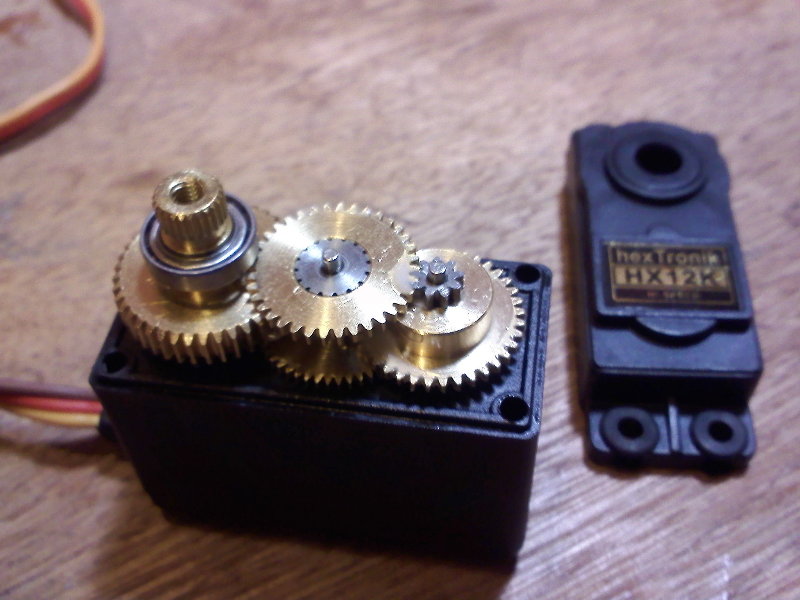
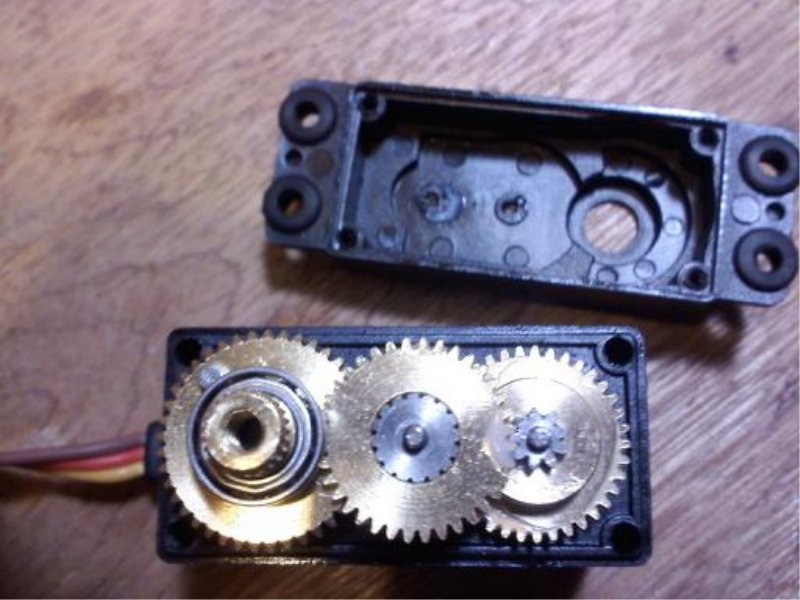
HX12K Servos
I would like to post these servos on the news
letter for anyone interested. I ordered 6 of
these from HobbyKing in HongKong for $59
w/2-3day air post. What a good deal for pylon
racing planes. I wouldn't put them in a 1.20
sized plane but they would surely be good for
general flying.
$7.99
215oz MG/BB High Speed Digital Servos 5-7Volt,
2oz standard size case
I researched these and found they work smoothly
after the case has been opened and a little more
lithium grease added to each gear.
Kenton
5-10
SERVO INFO
I found some web pages that list servos specs
for futaba, hitec, JR servos that I think will
be helpful for members to reference to at our
web site. Sometimes you come across a
servo and wondering the speed and torque on the
little beast. It's nice to be able to go
to our web site and pull up the data instead of
spending time googling and look. It may be
good to put in Tech Talk section of our web
site. I will update my own excel
spreadsheet that has the latest servo offering
specs that these older listings do not
have. It's nice complement to see list
that include newer servos from my file too.
Here ya go:
And if a young grasshoppa is wondering about:
How do you get your hands on that nifty degree
wheel?
Aahh, you have much to learn...
Here ya go: http://www.tavia.com/free_degree_wheel.html
Print it out and tape it to some hard
paper and you're set.
Khoi
3-15-10
NGK CM6 spark plugs
Are you guys geting tired of
getting ripped off from NAPA locally,
paying $7 for NGK CM6 spark plugs?
If so, stand back and be amazed...
I found boats.net web site through RCU
where you can get genuine ngk plugs for less
than $2 each.
I've just bought 20 plugs to last me for years.
Check it out.
These plugs are replacement for DA, DLE gassers.
Khoi
3-4-10
-----
Just a FYI, our shop sells Yamaha &
Honda parts also. We sell these plugs for
$2/each. If i knew people where wanting
these i would have them in stock.
Regards,
Drew Gauderman
RC Manager
Cottage Grove Yamaha & RC
1-541-942-3335
3-19
QUESTION
January 18, 2010
Does anyone have a handle on all those different
motor naming configurations? Lots of numbers and
what do they mean? MARK GIESSEN
COMMENT
Hello fellow aeronauts,
After an eight year hiatus, I am amazed and
somewhat bewildered at the improvements in
electric flight technology. For me, Lipo battery
ratings seemed a bit misleading when I was
trying to pick the correct pack for an airframe.
I searched many websites looking for a simple
rule of thumb for selecting a pack of which FMA
Direct proved to be very enlightening . They
seem to have a lot of information for an
electrical novice like myself and I felt it was
worth sharing. In paraphrasing ,voltage aside,
the mAh rating is only meaningful for a constant
rate of drain like a low current flashlight or a
transmitter. Meaning, my new 950mAh Lipo Battery
has a discharge rate of 0.950Amps for one
hour (950 x .001 to convert to Amps). This would
be fantastic if the flashlight scenerio could
power my plane. But as we all know, the throttle
thumb is dynamic and tends to move making a
constant discharge rates impractical.
As I studied the foil incased cells, I noticed
that the manufacture had added a new bonus
number that would surely fill me with
confidence.
25C. What the heck is "C"? Once
again back the web to discover the heart of the
mystery. As it happens, “C” means multiple
of discharge rate. (I never did find why “c” was
used, I guess it made the industry happy.) This
meant that my new lipo could produce a
theoretical current of 0.950 x 25 = 23.75
amps. Okay, now at least I know that can burn up
my 18AMP ESC without to much effort.
A couple of things for my rule of thumb
immediately came to mind , one get a bigger ESC
or never pull more than 18amps through my
existing one, and two, the motor /propeller
combination shouldn’t exceed 23.75 amps at full
power.
A fun fact, which I stumbled upon, is a battery
phenomenon called cell depression. This occurs
when the energy is sucked out of a battery pack
so fast that it can not chemically react fast
enough to keep the voltage up to it's rating.
The motor rpm slows down. Simply said, if my
airplane has a brisk take off and runs out of
power after few seconds of full throttle sky
boring, and then, when throttled back regains
power, it’s likely to be cell depression.
(This sure seemes a lot more complicated than
those wonderful little fuel burners I loved so
much. After all, if power was an issue I'd just
up size the engine and add nitro – problem
solved!) Anyway, being armed with the
fundamental concept of Lithium Polymer Amperage
rating spared me from spending extra cash on
ESC’s and motor issues. I am currently testing a
few motor-prop combinations for Amp
usage. MARK GIESSEN